What Makes a Watch 'Vintage' vs Just Old
Here's the thing about vintage mechanical watches: not every old watch is vintage, and not every vintage watch is worth your time. The generally accepted vintage window runs from the 1920s through the 1980s, right before quartz movements took over and nearly killed mechanical watchmaking completely.
But there's a huge difference between a vintage watch (something desirable, well-made, and historically interesting) and just old junk that someone's trying to sell because it has a leather strap and looks old. Plenty of cheap mechanical watches got made during the vintage era. They were garbage then and they're garbage now.
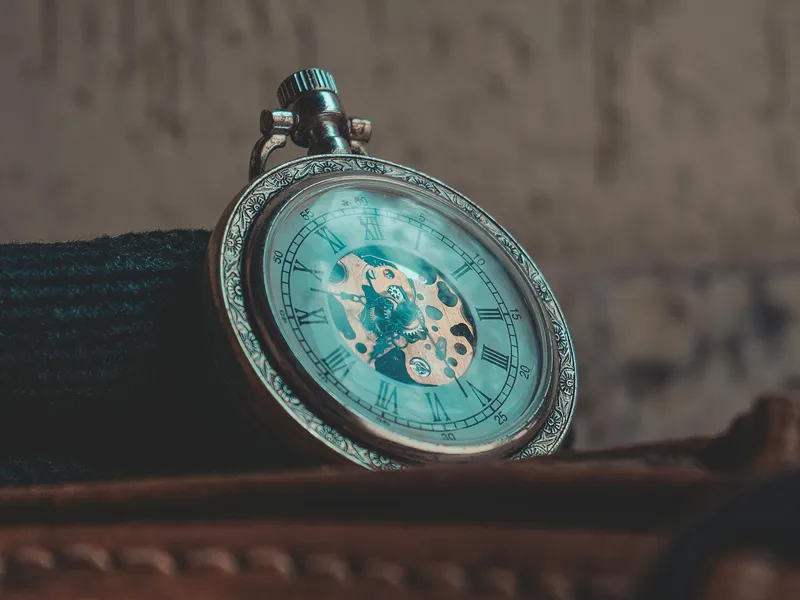 Photo by Douglas Stratotti on Pexels
The watches worth hunting fall into a few key eras. Pre-war dress watches from the 1920s-1940s were elegant, thin, and ran on manual-wind movements that needed winding every day or two. Military issue pieces from WWII through Vietnam are collectible because they were built to actual specs — water resistance, shock protection, legible dials. Then came the golden age of Swiss watchmaking in the 1950s-1960s, when companies competed on movement innovation and case design. This is where you find the holy grail pieces.
Why mechanical matters: these watches run on springs and gears. No batteries. No circuit boards. Just a mainspring that you wind up (either manually or automatically through wrist motion), which slowly releases energy through a series of gears and wheels. An escapement regulates that energy release, making the watch tick at a consistent rate. It's actual mechanical engineering you can see working.
The beauty is that a well-maintained vintage mechanical watch from 1965 can still keep time accurately today. Try using a 1965 computer or TV. Can't do it. But that Omega Seamaster? Still works, still looks good, and you can actually watch the movement through the caseback.
Most vintage pieces run on movements with 17-21 jewels (synthetic rubies used as bearings to reduce friction). Some have complications like date wheels, chronographs, or even moon phase indicators. The more complex the movement, the more expensive to service, but also the cooler to own.
The Golden Era Brands Worth Hunting
Some vintage brands command crazy prices because collectors have decided they're the holy grail. Others offer the same quality for way less money because they're not hyped on Instagram yet. Here's what's actually worth your attention.
Omega made some of the best vintage pieces you can find. Seamasters from the 1960s-70s are tough dive watches that still look clean today. The Speedmaster Professional went to the moon and collectors obsess over every reference variation. But here's the secret: vintage Omega watches are still somewhat affordable compared to vintage alternatives because Omega made a ton of them. A nice 1960s Seamaster in good condition runs $1,500-3,000. That's a lot of money but not insane for a 60-year-old Swiss watch.
Seiko is where smart collectors look. Japanese watchmaking in the 1960s-70s rivaled Swiss quality at lower prices. The Grand Seiko line competed directly with Swiss chronometer standards. Regular Seiko mechanical watches from this era — Lord Marvel, King Seiko, even standard automatic models — used high-beat movements and innovative designs. They're still undervalued. You can find quality vintage Seiko pieces for $300-800 that would cost triple if they had Swiss names on the dial.
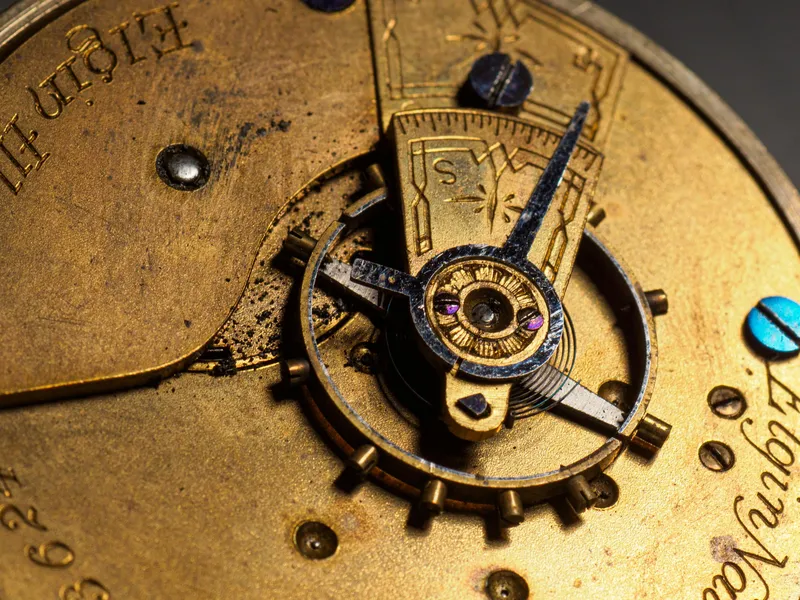 Photo by Dirk Schuneman on Pexels
Universal Genève is criminally underrated. Their Polerouter was designed by Gérald Genta (who later designed the Royal Oak and Nautilus) and featured a micro-rotor automatic movement. Their Compax chronographs used quality Valjoux movements and look fantastic. The brand isn't trendy so prices haven't exploded yet. Good examples run $2,000-5,000 when equivalent vintage alternatives cost double.
Hamilton made great American watches before they moved production overseas. Pre-1970s Hamilton pieces used quality movements and simple, clean designs. Military-issued Hamilton watches are especially collectible. Budget $400-1,200 for solid examples. They're not flashy but they're well-made and historically interesting.
Zenith created the El Primero movement in 1969 — the first automatic chronograph movement, and it's still used today. Vintage El Primero chronographs are complex, accurate, and beautiful. They cost less than equivalent vintage alternatives because the brand doesn't have the same recognition. Expect $4,000-8,000 for good examples, which sounds like a lot until you see what vintage alternatives cost.
Why some forgotten brands offer better value: A vintage watch market runs partly on hype. Certain brands (not naming names but you know who) command massive premiums because everyone wants them. Lesser-known brands with equal quality movements and build don't get the same attention. That's where you find deals. A Universal Genève Polerouter uses a quality automatic movement, has great design, and costs half what a comparable watch costs just because the name isn't as famous.
Movement Types You'll Actually Encounter
Let's talk about what's actually inside these things, because the movement is what you're really buying. The case is just housing.
Manual wind vs automatic: Manual wind movements need you to turn the crown every day or two to wind the mainspring. You wind it, it runs for 30-48 hours, then it stops. Automatic (self-winding) movements have a rotor that spins as you move your wrist, which winds the mainspring automatically. Wear it daily and it never stops. Both are cool. Manual wind gives you a little daily ritual. Automatic is easier for daily wear. Some collectors prefer manual because it's simpler — fewer parts to break.
Jewel count: You'll see movements advertised as "17 jewels" or "21 jewels." These are synthetic rubies used as bearings in the movement to reduce friction. 17 jewels became the standard for quality movements. More jewels doesn't automatically mean better, but anything under 17 jewels is probably a cheap movement. 21-25 jewels usually indicates an automatic movement (the automatic winding mechanism needs extra jewels). Don't get hung up on jewel count beyond checking that it's at least 17.
Column wheel vs cam chronographs: If you're looking at vintage chronographs (stopwatch complications), the movement uses either a column wheel or a cam system to operate the chronograph functions. Column wheel is considered superior — smoother action, more complex to manufacture, more expensive to service. Cam chronographs work fine and cost less. Unless you're spending $5,000+, you're probably getting a cam chronograph and that's fine.
High-beat movements: Most vintage movements beat at 18,000 or 21,600 vibrations per hour (vph). High-beat movements run at 28,800 vph or higher. The faster beat rate theoretically improves accuracy because the escapement is regulating time in smaller increments. Seiko and Zenith made famous high-beat movements. They're cool but they wear out faster and cost more to service.
ETA and Valjoux calibers: These movement manufacturers supplied hundreds of different watch brands. Many vintage Swiss watches use ETA or Valjoux movements. This is good news because parts are available and watchmakers know how to service them. An ETA 2824 automatic movement or a Valjoux 7750 chronograph movement appears in dozens of brands. If your vintage watch uses a common movement, service is easier and cheaper.
What to Check Before You Buy
This is where people screw up and buy expensive problems. Here's what actually matters when you're looking at a specific watch.
Service history: These movements need maintenance every 3-5 years. The oils inside dry out, the movement gets dirty, accuracy suffers. If a seller can't tell you when it was last serviced, assume it needs service immediately. Budget $200-300 for a basic service, $400-600 for a chronograph. If the watch hasn't been serviced in 20 years, it might be running now but it won't be for long.
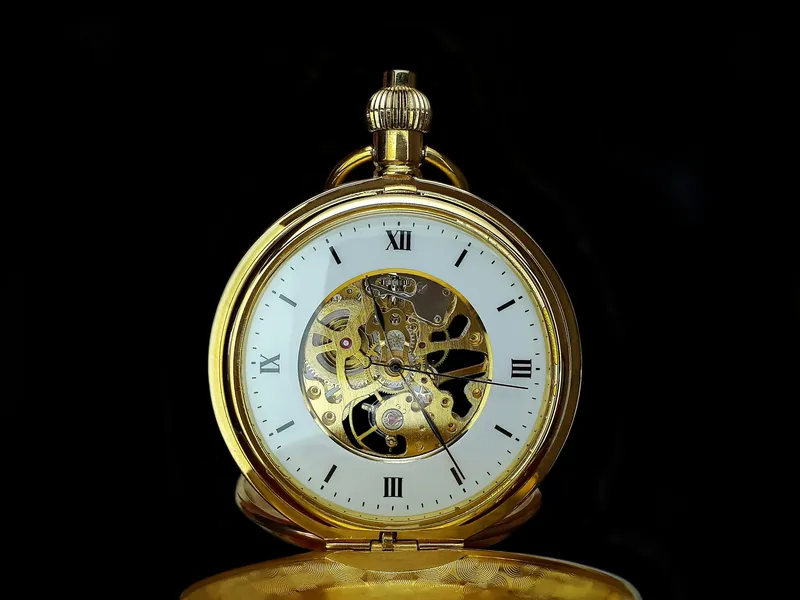 Photo by Felix Mittermeier on Pexels
Original dial vs refinished: This is huge. A refinished dial tanks the value hard. Original dials have aged naturally — maybe the lume has turned creamy, maybe there's light patina. That's good. Refinished dials look too fresh, fonts might be slightly wrong, printing quality isn't as crisp as original. Collectors can spot refinished dials from across the room. They kill value. A watch with a worn but original dial is worth more than one with a "restored" dial.
Case condition: Light wear is expected and fine. Heavy polishing is bad. When cases get polished repeatedly, material gets removed. Sharp edges become rounded. Engravings get shallow or disappear. Case lugs get thin. Over-polished vintage watches look wrong and collectors avoid them. Some light scratches are better than aggressive polishing.
Crystal scratches: Acrylic crystals (which most vintage watches have) scratch easily but polish out easily too. Crystal scratches are cheap to fix — either polish them with Polywatch or replace the crystal for $20-50. Don't let crystal scratches scare you away from an otherwise good watch. Movement problems, on the other hand, cost hundreds to fix.
Water damage: This is the dealbreaker. Water damage creates stains on the dial that look like tide marks or halos around the markers. It corrodes the movement. Once a dial has water damage, it's wrecked. Walk away. Water-damaged movements can be serviced but it's expensive and the dial is still ruined.
Franken-watches: These are watches assembled from mismatched parts. Wrong hands for the dial, movement from a different model, replaced parts that don't match. Sometimes it's innocent — a watchmaker replaced a broken part with whatever fit. Sometimes it's intentional fraud — building a "vintage" watch from random parts and selling it as original. Check that the dial, hands, case, and movement all match known examples of that reference number. When in doubt, post photos to watch forums. Those people know every detail and will spot fakes instantly.
The Real Cost of Ownership
The purchase price is just the start. Here's what actually costs money over time.
Service costs: You're looking at $150-300 for a basic three-hand automatic service. $250-400 for manual wind or date complications. $400-600+ for chronographs. This needs to happen every 3-5 years. Factor this into your budget. A $1,000 watch that needs a $400 service immediately is really a $1,400 watch.
Parts availability: Common movements (ETA, Valjoux, standard Seiko calibers) have parts available. Watchmakers can service them easily. Rare movements or obscure brands might need custom parts or donor movements. This gets expensive fast. Before buying something unusual, check with a watchmaker about parts availability. If they say it's hard to service, believe them.
Buy already-serviced: Seriously. Pay the extra $200-300 to buy a watch that's already been serviced. The seller has absorbed the cost and you know it's running well. You can wear it immediately instead of waiting weeks for service and spending hundreds. Unless you're getting a smoking deal, buy serviced.
Insurance: If you're wearing a $2,000+ watch daily, insure it. Your homeowner's or renter's insurance might cover it, but probably with a low limit. Get a separate jewelry rider or personal articles policy. Costs maybe $15-30 per year per $1,000 of coverage. Worth it. Vintage watches get stolen, dropped, and broken.
The collection problem: Nobody buys one vintage watch. You'll start with one, then you'll see another deal, then you'll want to try a different era or style. Next thing you know you have six watches and you're hunting for number seven. This is real. Budget accordingly. Or don't fight it and just accept that you're going to own multiple watches.
Where Collectors Actually Find Deals
The best deals aren't on the mainstream sites everyone checks. They're in weird corners of the market where sellers don't know what they have.
Estate sales and auctions: When someone passes away and the family liquidates everything, watches sometimes show up undervalued. Estate sale companies usually aren't watch experts. They price based on what they think looks reasonable. You can find quality pieces for under market value if you show up early and know what you're looking at. Bring a loupe and check the watch carefully before buying.
Vintage watch forums: Watchuseek and brand-specific forums have sales sections where collectors trade directly. Prices are usually fair because the buyers know value. You're dealing with enthusiasts who care about their reputations. Scams are rare. The downside is that deals go fast. Good watches get snapped up in minutes.
Instagram dealers: A whole ecosystem of vintage watch dealers operates primarily on Instagram. They post watches with detailed photos and prices. Some are trustworthy, some aren't. Check how long they've been active, read through their tagged photos (those are customer posts), see if they're mentioned positively in watch forums. Good Instagram dealers offer reasonable prices and accurate descriptions. Bad ones post misleading photos and overprice everything.
eBay: The platform gets a bad reputation but you can find great watches if you know what you're looking for. Search for specific model names and reference numbers, not generic terms. Check seller feedback carefully. Ask questions before bidding. Request additional photos of the movement. Use completed listings to see actual selling prices, not current inflated asking prices. The deals are there but you need to sort through a lot of junk.
Local watchmakers: Some watchmakers who've been around for decades have acquired vintage pieces over the years — trade-ins, estate purchases, orphaned repairs. Ask if they have anything for sale. You might find something interesting and you know it's been looked at by a professional.
Flea markets and antique malls: Rare, but it happens. Most vintage watches at flea markets are junk, but occasionally you find something real mixed in with costume jewelry. You need to know what you're looking at and be ready to walk away from most of what you see. Bring cash and a loupe. Don't expect the seller to know anything about watches.
Daily Wear Reality Check
Wearing a vintage watch daily isn't like wearing a modern watch. Here's what that actually looks like.
Accuracy expectations: Modern quartz watches gain or lose maybe 5 seconds per month. Vintage mechanical watches gain or lose 10-30 seconds per day. That's normal. Really well-regulated pieces might get down to +/- 5 seconds per day, but don't expect it. You'll adjust the time maybe once a week. If you need split-second accuracy for work, get a quartz watch. If you just need to know approximately what time it is, vintage mechanical is fine.
Water resistance is gone: Even if your watch was originally rated for 30m, 50m, or 100m water resistance, assume that's gone after 40-60 years. The gaskets have dried out and failed. Don't swim, don't shower, don't wash dishes while wearing it. Some collectors don't even wash their hands with the watch on. Water damage ruins watches and fixing it costs hundreds. Keep vintage watches dry.
Winding and setting technique: Wind manual watches slowly and gently. Stop when you feel resistance. For automatic watches, you can manually wind them to get them started if they've stopped, but don't overdo it — a few winds is enough. When setting the time, only move the hands forward, not backward (some movements can handle backward but some can't, so just go forward always). Don't quick-set the date between 8pm and 4am when the mechanism is engaged.
Don't wear them during sports or labor: These are 50-70 year old watches. Don't wear them while moving furniture, playing basketball, or doing yard work. Shocks can damage the movement. The crystals can break. Save vintage watches for office wear, dinner, normal daily activity. If you're doing something physical, wear a modern watch or nothing.
The daily ritual: There's something satisfying about winding a manual watch every morning or setting an automatic watch each time you put it on. It's a little mechanical ritual that smartwatches and quartz watches don't have. You're interacting with a machine, not just strapping on a digital display. Some people find this annoying. Others love it. You'll know pretty quickly which type you are.
The Investment Angle (But Don't Count On It)
Some vintage watches have appreciated wildly over the past decade. A vintage alternative that sold for $150 in 2010 might sell for $30,000 today. That's real. But it's also rare and you probably won't pick the winners.
What's actually appreciated: Specific references of certain brands have gone crazy. Vintage alternatives, Omega Speedmasters with certain dial variations, military-issued watches with provenance, rare chronographs. These pieces were already collectible in 2010. They just got more collectible. If you bought the right ones early, you made money. If you buy them now at current prices, you're paying market rate.
Most vintage watches are stable: A typical vintage Omega Seamaster or Seiko automatic doesn't appreciate wildly. It holds value reasonably well if you maintain it. But it's not going to 10x. You'll probably sell it for roughly what you paid (adjusted for inflation) if you keep it in good shape. That's fine. That's what stable collectibles do.
Buy what you want to wear: Don't buy a watch because you think it'll flip for profit. Buy it because you actually want to wear it and look at it every day. If it appreciates, great. If it doesn't, you still got to wear a cool watch. Buying for investment only works if you have deep market knowledge and even then it's speculative.
Condition and originality drive value: The watches that appreciate the most are completely original with good condition and documented history. Refinished dials, replacement parts, and poor condition kill long-term value. If you want a watch that holds value, buy the best condition, most original example you can afford. Don't buy a project piece expecting to make money on it.
The market is smarter now: Ten years ago you could find vintage watches at garage sales for $20 that were worth $500. Those days are mostly gone. Everyone has a smartphone and can Google "vintage Omega watch value." Sellers know what things are worth. You're not going to stumble into amazing deals unless you get really lucky. The market has caught up.